Measurable progress in campus sustainability goals
An FY25 progress report highlights achievements on the goals of the University's Climate & Sustainability Action Plan 4.0 on campus and beyond.
Stay up to date on University Announcements and Penn-related news concerning sustainability and climate action.
An FY25 progress report highlights achievements on the goals of the University's Climate & Sustainability Action Plan 4.0 on campus and beyond.
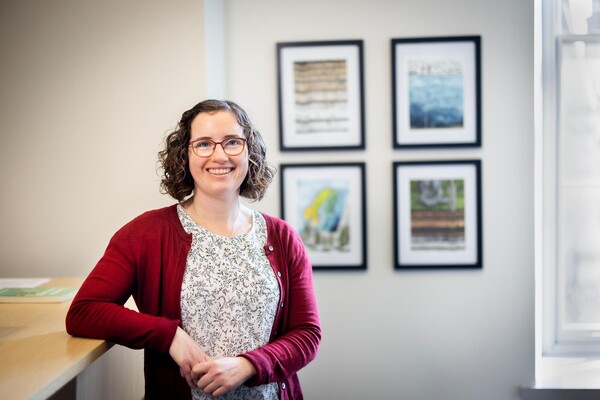
Melissa Charenko’s new book shares the history of how 20th-century scientists used climate proxies’—such as tree rings and fossil pollen—to understand past climates, which has implications for future climate action.
For nearly a decade, Leigh Stearns and collaborators aimed a laser scanner system at Greenland’s Helheim Glacier. Their long-running survey reveals that Helheim’s massive calving events don’t behave the way scientists once thought, reframing how ice loss contributes to sea-level rise.
In the shadowy layers of the Pacific, microbes decide how much nitrous oxide—a potent greenhouse gas—rises skyward. New research from Penn’s Xin Sun offers an improved understanding of microbial ecology and geochemistry—key to forecasting global emissions in response to natural and man-made climate change.
Carley is an expert on energy policy, affordability, and transition.
Clean energy expert and senior research fellow at Penn Joseph Romm says that Taylor Swift’s lyrics offer storytelling techniques that can be applied for impact-driven climate communications.
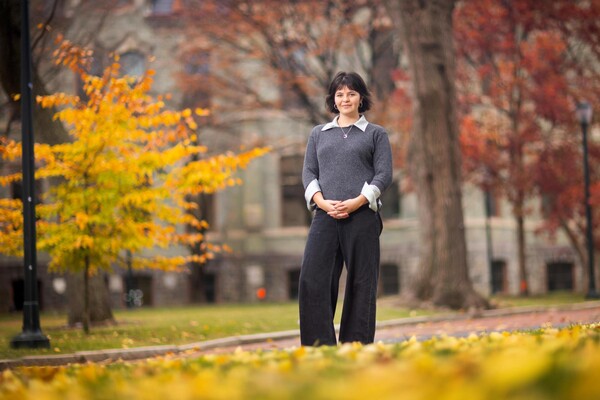
Griffin Pitt’s upbringing made her passionate about water access and pollution, and Penn has given her the opportunity to explore these issues back home in North Carolina and abroad.
Taking place Oct. 13 to 17, Penn’s sixth Climate Week includes dozens of in-person and virtual events that cross disciplines, from energy policy and history to engineering and medicine.
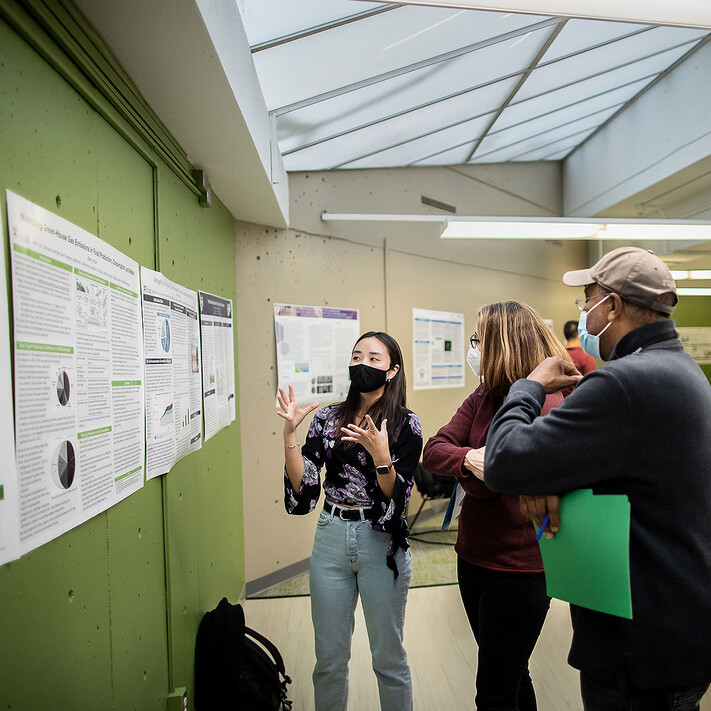
Third-year students Nafisa Bangura and Angelica Dadda expanded upon a multidisciplinary research endeavor to evaluate a reflective pavement coating as a tool to mitigate extreme heat. Their work may inform policy efforts to improve urban heat resilience.
With the help of five Penn undergrads, biology professor Dustin Brisson’s research group collected 9,000 tick specimens this summer to understand how seasonal activity patterns of these arachnids affects human pathogens and what role a changing climate might play.
A Wharton School study found that homes damaged by Hurricane Harvey in 2017 were far less likely to default if they were inside the federal flood zone.
Michael Mann of the School of Arts & Sciences says, “We don’t have decades to address the climate crisis.”
Michael Mann of the School of Arts & Sciences says that it no longer makes sense to artificially cap the hurricane scale at five while wind-based metrics continue to be used.
Micheal Mann of the School of Arts & Sciences discusses Bill Gates’ shift in rhetoric on climate.
Joseph Romm of the School of Arts & Sciences conducted research on the effectiveness of carbon offsetting to date, concluding the practice is ineffective and riddled with “intractable” problems.
Michael Mann of the School of Arts & Sciences has co-authored a new book on the anti-science movement.
“Science Under Siege,” a new book co-authored by Michael Mann of the School of Arts & Sciences, details what the public and scientific community can do to counter politically and ideologically motivated attacks on science.
The Thermal Architecture Lab from the Weitzman School of Design installed a modular pavilion on Governors Island in New York that radiates cool air for an air conditioning alternative in public spaces.
Michael Mann of the School of Arts & Sciences says that increased instances of flooding are attributable to human-caused climate warming.
Michael Mann of the School of Arts & Sciences says that it’s cheaper, easier, and more effective to curb carbon emissions now than to reverse a temperature rise that has already happened.
An FY25 progress report highlights achievements on the goals of the University's Climate & Sustainability Action Plan 4.0 on campus and beyond.
As part of the new Water-AI Nexus Center of Excellence collaboration, The Water Center at Penn is helping answer key questions around technology and sustainability.
As the Weitzman School of Design prepared to open its first new building in more than 50 years, members of the design, preservation, and construction teams were highlighted in a series of conversations about the making of Stuart Weitzman Hall.
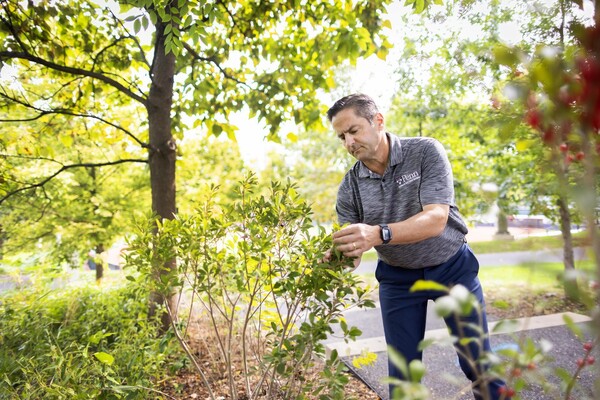
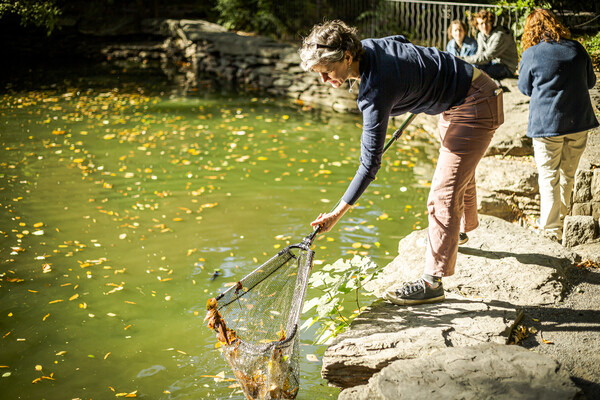
As Penn’s urban park manager, Craig Roncace leads a versatile team in charge of outdoor maintenance, waste management, and sustainability initiatives across campus.
Taking place Oct. 13 to 17, Penn’s sixth Climate Week includes dozens of in-person and virtual events that cross disciplines, from energy policy and history to engineering and medicine.
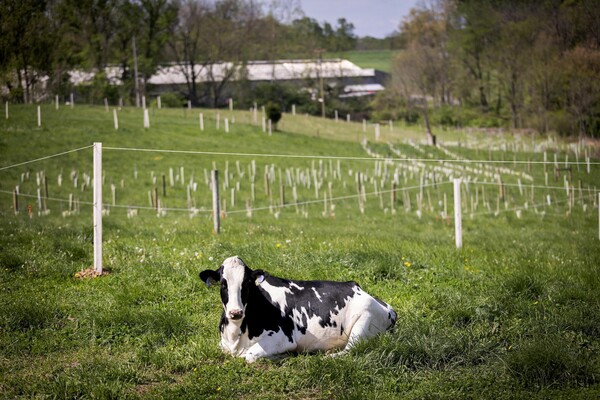
Penn researchers are leading a multidisciplinary land-use project that blends trees, livestock, and streamside buffers to turn New Bolton Center into a living lab for stewardship agriculture.
Third-year students Nafisa Bangura and Angelica Dadda expanded upon a multidisciplinary research endeavor to evaluate a reflective pavement coating as a tool to mitigate extreme heat. Their work may inform policy efforts to improve urban heat resilience.
Three recent building projects at the University of Pennsylvania have earned LEED Platinum, Gold, and Silver certifications, underscoring Penn’s ongoing commitment to sustainable design and construction.
Weitzman School of Design graduate student Frank Chen provides insight into his project to find the best spots to plant street trees and optimize shade coverage for pedestrians in Philadelphia.
Ahead of Move-In and the start of a new academic year, construction teams mark milestones in vital renovations and maintenance across the University.
Nina Morris of the sustainability office discusses reduction of campus move-out waste.
Angela Pachon of the Kleinman Center for Energy Policy in the Weitzman School of Design comments on the importance of a track record when advocating for sustainable energy.
John Quigley of the Kleinman Center for Energy Policy at the Weitzman School of Design says that the construction of every new natural gas plant is a setback for climate goals.
A report by the Kleinman Center for Energy Policy at the Weitzman School of Design predicted that fuel standard changes in California could increase the cost of gas by 85 cents a gallon through 2030.
Danny Cullenward of the Kleinman Center for Energy Policy at the Weitzman School of Design says that the negative impacts of biofuels on land are difficult to overstate.
Penn’s Climate and Sustainability Action Plan outlines the University’s efforts to combat climate change during the next five years.
Michael Mann of the School of Arts & Sciences discusses how much a president can do or undo when it comes to environmental policy.
Michael Mann of the School of Arts & Sciences voices his concern about the possibility that the U.S. could become a petrostate.
Michael Mann of the School of Arts & Sciences says that total carbon emissions including fossil fuel pollution and land use changes such as deforestation are basically flat because land emissions are declining.
Jennifer Wilcox of the School of Engineering and Applied Science and Kleinman Center for Energy Policy at the Weitzman School of Design says that the carbon-removal potential of forestation can’t always be reliably measured in terms of how much removal and for how long.
November 29, 2022
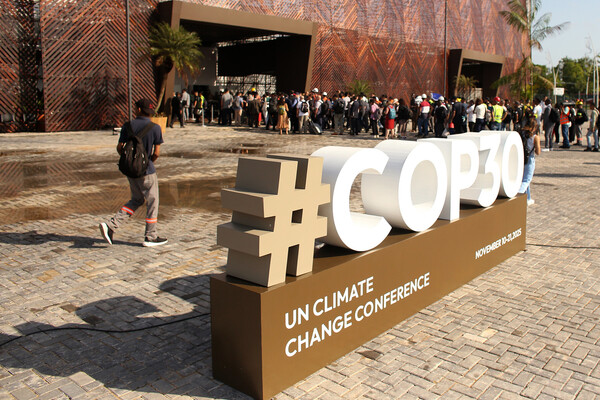
The world gathering in Egypt for COP27 reminds us of the urgency of our collective fight against climate change. Faculty, student, and staff attendees from Penn represent the energy and talent that so many Penn community members contribute to this crucial effort.
March 02, 2022
In April 2021, the Office of Investments set a goal of reducing the net anthropogenic greenhouse gas emissions associated with the endowment’s investments to zero by 2050. Since then, we have collaborated with Penn’s Investment Board to develop a framework for achieving net zero.
April 07, 2021
Combating climate change is one of the paramount challenges of our time. We write today to update the University community on a significant new initiative that Penn is undertaking.